

Vaccination is one of the most important aspects of responsible dog ownership. Vaccines protect dogs from serious, sometimes fatal, diseases and also help prevent the spread of infections to other animals and, in some cases, humans. However, many dog owners often ask the same question: How often should dogs be vaccinated? The answer depends on several factors, including the dog’s age, lifestyle, health condition, and local disease risks. Understanding vaccination schedules can help ensure your dog stays healthy throughout its life.
Why Vaccinations Are Important for Dogs
Vaccines work by stimulating a dog’s immune system to recognize and fight specific diseases. Without proper vaccination, dogs are at risk of contracting illnesses such as rabies, distemper, parvovirus, and hepatitis. These diseases can cause severe suffering, long-term health problems, or even death.
Vaccinating dogs also plays a vital role in public health. Some diseases, like rabies, are zoonotic, meaning they can be transmitted from animals to humans. By keeping dogs vaccinated, communities reduce the risk of disease outbreaks and protect both pets and people.
Core vs Non-Core Vaccines
Before discussing how often dogs should be vaccinated, it is important to understand the difference between core and non-core vaccines.
Core Vaccines
Core vaccines are recommended for all dogs, regardless of their lifestyle or location. These vaccines protect against diseases that are widespread, highly contagious, or life-threatening. Core vaccines typically include:
- Rabies
- Canine distemper
- Canine parvovirus
- Canine adenovirus (hepatitis)
These vaccines are considered essential and form the foundation of every dog’s vaccination schedule.
Non-Core Vaccines
Non-core vaccines are optional and depend on a dog’s environment, lifestyle, and risk of exposure. Examples include vaccines for:
- Bordetella (kennel cough)
- Leptospirosis
- Lyme disease
- Canine influenza
A veterinarian usually recommends these vaccines based on factors such as whether the dog spends time outdoors, visits boarding facilities, or lives in an area where certain diseases are common.
Puppy Vaccination Schedule
Puppies require more frequent vaccinations than adult dogs because their immune systems are still developing. At birth, puppies receive some antibodies from their mother, but this protection fades over time.
Early Puppy Vaccines
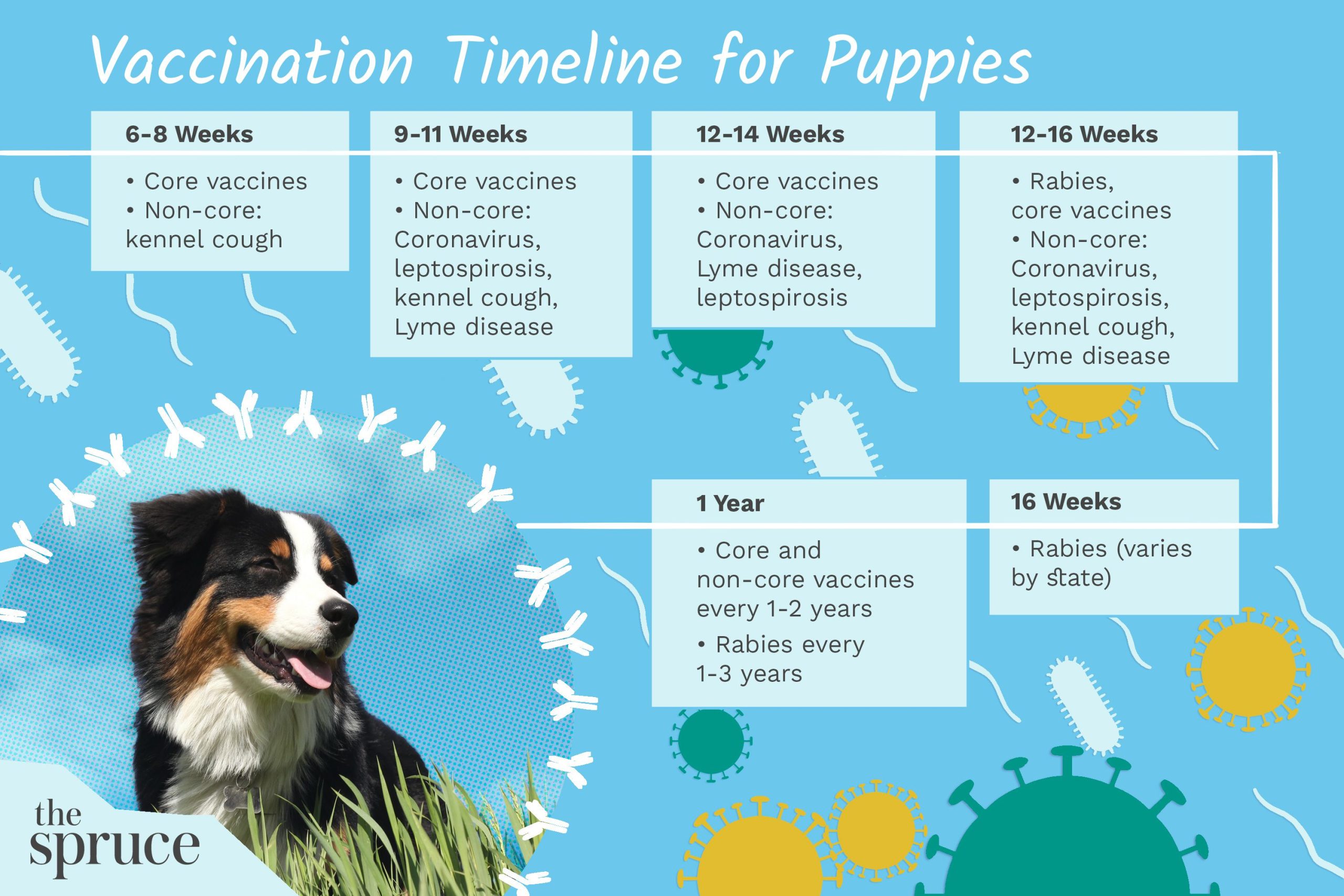
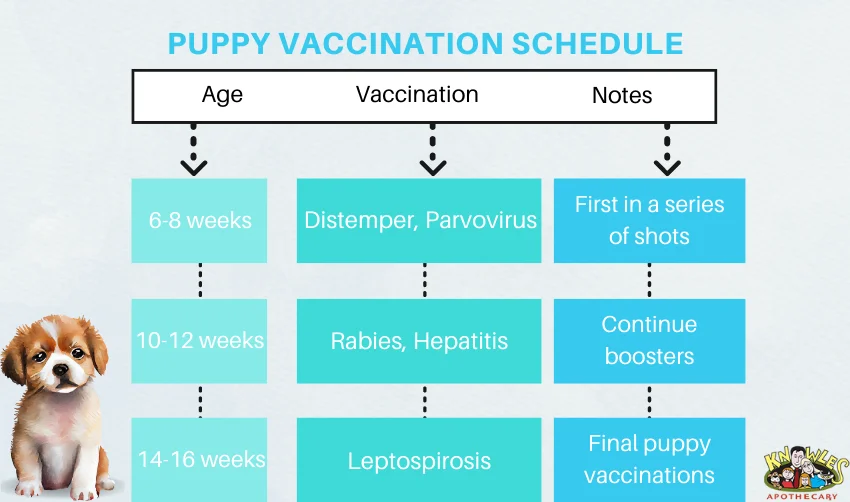
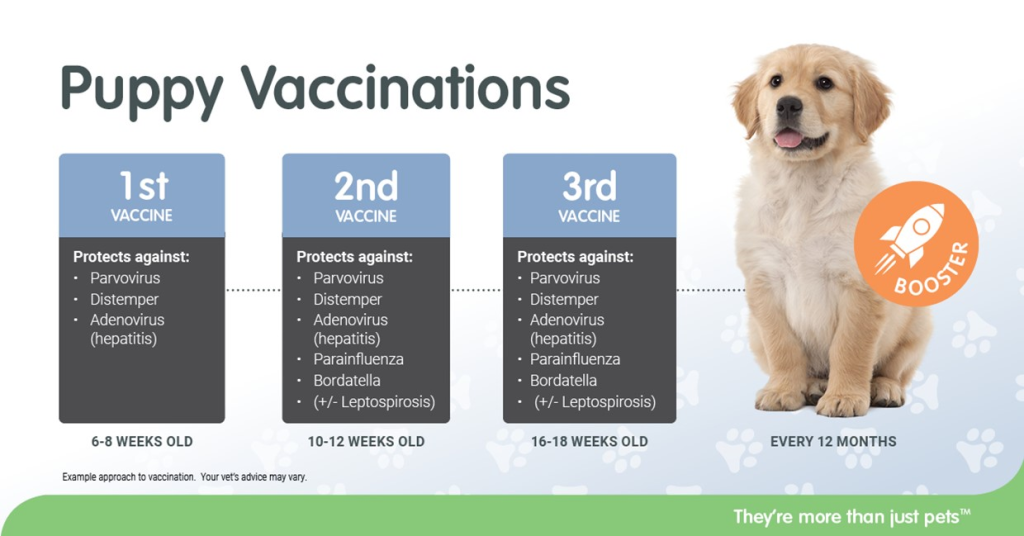
Puppies typically begin their vaccination schedule at around 6 to 8 weeks of age. At this stage, they receive their first set of core vaccines. These vaccines are repeated every few weeks to ensure proper immunity.
Booster Shots for Puppies
Puppy vaccinations are usually given every 3 to 4 weeks until the puppy is about 16 weeks old. This series of shots is crucial because it helps build strong and lasting immunity. Missing or delaying these boosters can leave puppies vulnerable to dangerous diseases.
Rabies Vaccination for Puppies
The rabies vaccine is usually given when a puppy is between 12 and 16 weeks old, depending on local laws and veterinary guidelines. Rabies vaccination is often legally required and must be kept up to date throughout the dog’s life.
Adult Dog Vaccination Schedule
Once a dog has completed its puppy vaccinations, the frequency of vaccinations changes. Adult dogs do not need vaccines as often as puppies, but regular boosters are still necessary.
One-Year Booster
Most dogs receive a booster vaccination one year after completing their puppy vaccine series. This booster helps reinforce immunity and ensures long-term protection.
Every One to Three Years
After the one-year booster, many core vaccines are given every one to three years. The exact timing depends on the type of vaccine used, the dog’s health, and veterinary recommendations. For example:
- Rabies vaccines are typically given every one or three years, depending on the formulation and local regulations.
- Distemper, parvovirus, and adenovirus vaccines are often given every three years in healthy adult dogs.
Non-core vaccines may be given annually or more frequently if the dog is at higher risk of exposure.
Senior Dog Vaccination Considerations
As dogs age, their immune systems may weaken, and they may develop chronic health conditions. This does not mean vaccinations should stop, but the approach may need adjustment.
Veterinarians often evaluate senior dogs individually to determine which vaccines are still necessary. Core vaccines are usually continued, but non-core vaccines may be reduced if the dog’s lifestyle changes. For example, an older dog that no longer visits boarding facilities may not need certain vaccines.
Factors That Affect How Often Dogs Should Be Vaccinated
There is no one-size-fits-all vaccination schedule. Several factors influence how often a dog should be vaccinated.
Lifestyle and Environment
Dogs that frequently interact with other animals, travel often, or spend time in parks, kennels, or daycare facilities are at higher risk of exposure to infectious diseases. These dogs may need more frequent vaccinations or additional non-core vaccines.
Geographic Location
Certain diseases are more common in specific regions. For example, Lyme disease is more prevalent in areas with high tick populations. Veterinarians consider local disease risks when recommending vaccines.
Health Status
Dogs with weakened immune systems or chronic illnesses may need special vaccination plans. In some cases, vaccines may be delayed or adjusted to avoid unnecessary stress on the body.
Legal Requirements
Rabies vaccination is legally required in many places, and the frequency is often regulated by law. Dog owners must follow local regulations to remain compliant.
Vaccine Titers and Alternative Approaches
Some dog owners choose to measure immunity through vaccine titers. A titer test measures the level of antibodies in a dog’s blood to determine whether they are still protected against certain diseases.
While titer testing can provide useful information, it is not a replacement for all vaccines. For example, rabies titers are often not accepted as a legal substitute for vaccination. Veterinarians can help determine whether titer testing is appropriate for a specific dog.
Risks and Side Effects of Vaccination
Vaccines are generally safe, but like any medical treatment, they can cause side effects. Most side effects are mild and temporary, such as:
- Soreness at the injection site
- Mild fever
- Lethargy
Serious reactions are rare but can include allergic responses. The risk of severe disease from not vaccinating is far greater than the risk of side effects for most dogs. Discussing concerns with a veterinarian helps ensure informed decisions.
Over-Vaccination Concerns
Many dog owners worry about over-vaccination. Modern veterinary guidelines focus on avoiding unnecessary vaccines while still providing adequate protection. This is why many core vaccines are now given every three years instead of annually.
Working with a veterinarian to create a personalized vaccination schedule helps balance safety and effectiveness.
The Role of Regular Veterinary Checkups
Vaccination schedules are best managed during routine veterinary visits. Regular checkups allow veterinarians to assess a dog’s overall health, update vaccinations as needed, and adjust recommendations based on age and lifestyle changes.
Even if a dog does not need vaccines every year, annual wellness exams are still important for early detection of health issues.
Conclusion
So, how often should dogs be vaccinated? The answer depends on the dog’s age, health, lifestyle, and local regulations. Puppies require frequent vaccinations during their first months of life, while adult dogs typically need boosters every one to three years. Senior dogs may need tailored vaccination plans based on their individual needs.
Vaccinations are a crucial part of preventive care and help ensure dogs live long, healthy lives. By following veterinary guidance and maintaining an appropriate vaccination schedule, dog owners can protect their pets from serious diseases and contribute to the overall health of the animal community.
