

Dog nail trimming is an essential part of canine care that often gets overlooked. Many dog owners underestimate the importance of keeping their dog’s nails properly trimmed, assuming it is a minor aspect of grooming. However, nail care is vital for your dog’s overall health, mobility, and comfort. In this comprehensive guide, we will explore the reasons for nail trimming, how to trim nails safely, tools required, signs of overgrown nails, and tips to make the process easier for both you and your dog.
Why Dog Nail Trimming Is Important
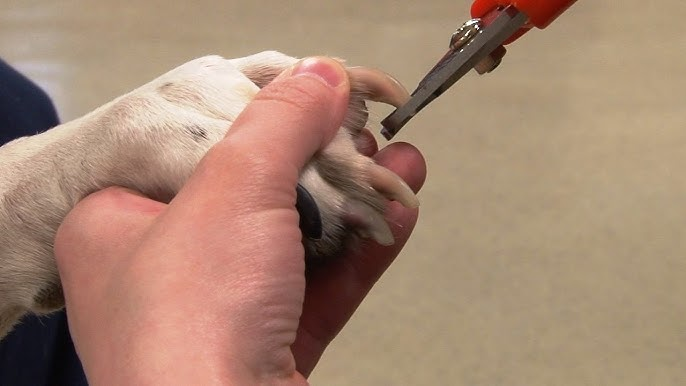
Dogs’ nails are composed of a hard outer shell and a soft inner part called the quick, which contains nerves and blood vessels. If nails grow too long, they can cause several problems:
- Pain and Discomfort: Long nails can press against the dog’s paw pads and create discomfort when walking or running.
- Joint Stress: Overgrown nails can alter a dog’s natural gait, placing stress on their joints, hips, and spine.
- Injury Risk: Long nails are more likely to break or split, which can be painful and prone to infection.
- Damage to Surfaces: Dogs with long nails can scratch floors, furniture, and even their owners accidentally.
- Posture Problems: Nails that curl under can make it difficult for dogs to stand or balance properly, leading to long-term musculoskeletal issues.
By keeping your dog’s nails at an appropriate length, you ensure comfort, safety, and the overall well-being of your pet.
How Often Should You Trim Your Dog’s Nails?
The frequency of nail trimming depends on several factors including the dog’s breed, activity level, and the type of surfaces they walk on. Dogs that regularly walk on concrete or rough surfaces may naturally wear their nails down and require less frequent trimming. On average:
- Small breeds: Every 2–3 weeks
- Medium to large breeds: Every 3–4 weeks
- Active dogs: May need trimming less often if outdoor surfaces naturally wear the nails
It’s important to check your dog’s nails regularly. If you hear them clicking on hard floors or see them touching the ground when standing, it’s time for a trim.
Tools You Need for Nail Trimming
Several tools are available for dog nail trimming, and choosing the right one can make the process easier and safer. The most common options include:
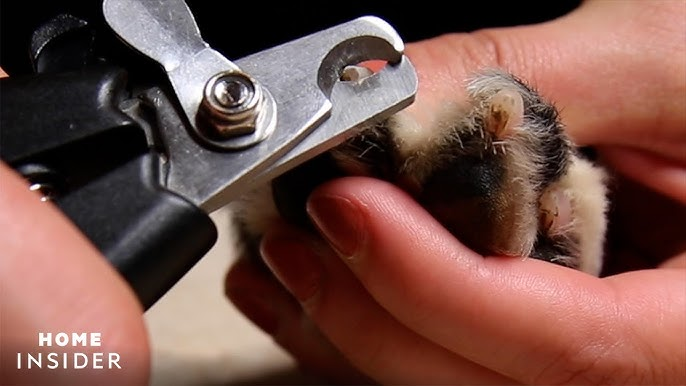
- Guillotine Clippers: Ideal for small to medium-sized dogs, these clippers have a hole where the nail is inserted and a blade that cuts with a single squeeze.
- Scissor-Style Clippers: Best suited for larger breeds with thicker nails, these clippers work like scissors and allow more control.
- Nail Grinders or Dremels: These are electric tools that slowly grind down the nail. They are useful for dogs that are nervous about clippers and for smoothing edges after trimming.
- Styptic Powder: While not a trimming tool, this is essential for stopping bleeding in case you accidentally cut the quick.
Always ensure your tools are sharp and clean. Dull clippers can crush the nail instead of cutting it cleanly, causing pain.
Preparing Your Dog for Nail Trimming
Many dogs feel anxious or fearful about nail trimming. Gradual desensitization and positive reinforcement can help:
- Introduce the Tools: Allow your dog to sniff and explore the clippers or grinder without using them initially.
- Positive Association: Pair the tools with treats or gentle petting to create a positive connection.
- Touch the Paws: Regularly handle your dog’s paws, touching their nails gently to get them comfortable with the sensation.
- Short Sessions: Start with trimming just one or two nails at a time if your dog is nervous.
Patience is key. Rushing the process can increase anxiety and make future sessions more difficult.
Step-by-Step Guide to Trimming Dog Nails
Here’s a step-by-step approach to trimming nails safely:
- Choose a Calm Environment: Find a quiet, well-lit area where your dog feels comfortable.
- Inspect the Nails: Identify the quick, which appears as a pink area inside the nail for dogs with light-colored nails. For dark nails, trim small amounts gradually to avoid cutting the quick.
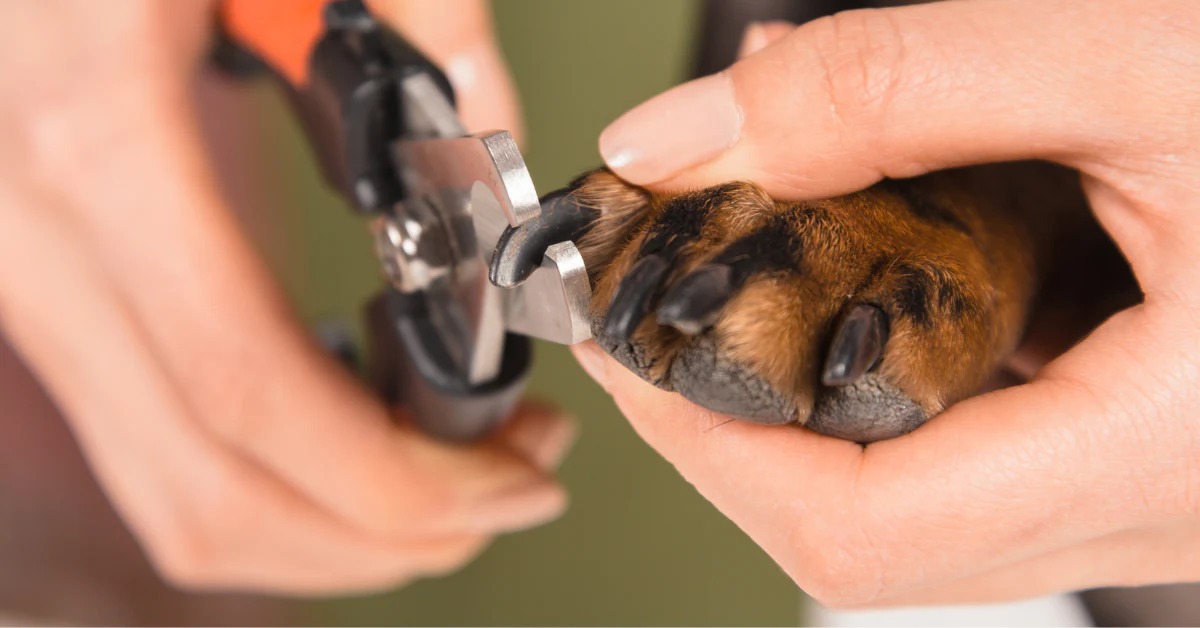
- Hold the Paw Securely: Gently hold the paw between your thumb and fingers. Make sure your dog is relaxed.
- Trim the Nail: Use the clipper to cut a small portion at a time. Avoid cutting too close to the quick. If using a grinder, gently press the grinder against the tip of the nail and move it slowly.
- Smooth the Edges: After trimming, use a file or grinder to smooth sharp edges.
- Reward Your Dog: Immediately reward your dog with treats, praise, or playtime to reinforce a positive experience.
Signs of Overgrown Nails
It’s important to recognize when nails are too long. Common signs include:
- Nails touching or scraping the floor when standing
- Clicking sounds on hard floors
- Curved nails that may grow into the paw pad
- Limping or reluctance to walk
- Redness, swelling, or infection at the base of the nail
Addressing overgrown nails promptly can prevent discomfort and more serious health issues.
Special Considerations
- Puppies: Begin trimming when they are young to establish a routine and reduce fear.
- Senior Dogs: Older dogs may have thicker or more brittle nails. Take extra care and trim slowly.
- Health Conditions: Dogs with arthritis or mobility issues may be more sensitive to nail trimming. Consult your veterinarian if needed.
Tips for Making Nail Trimming Easier
- Consistency: Trim nails regularly to prevent overgrowth and reduce stress for your dog.
- Use Distraction: Give treats, toys, or gentle massage to keep your dog calm.
- Proper Restraint: Gently restrain your dog to prevent sudden movements. A helper may be useful for large or wiggly dogs.
- Know When to Stop: If your dog becomes overly stressed, take a break and try again later.
- Seek Professional Help: If trimming at home is too stressful or risky, professional groomers or veterinarians can perform the task safely.
Conclusion
Dog nail trimming is more than a cosmetic procedure; it is an essential part of your dog’s health routine. Proper nail care prevents pain, supports proper posture, reduces injury risk, and ensures your dog remains comfortable and active. By using the right tools, following safe trimming techniques, and incorporating positive reinforcement, you can make nail trimming a stress-free experience for both you and your dog.
Remember, patience and consistency are key. Over time, nail trimming can become a routine that your dog tolerates, and even enjoys, making it a simple but powerful step in maintaining their overall well-being.
